


Page 29 - 2985-Florida's-Guide-to-Aging-Drivers-(EnglishOnly)-20171030-rgb-screen
P. 29
of motion in the neck, torso, arms, legs, or joints.
        Vertigo, dizziness, or loss of balance can occur along
        with muscle spasms or tremors that may cause you to
        lose control of your vehicle.


        Medications


        Older adults take longer to process and eliminate
        any kind of medication, both prescriptions and over-
        the-counter drugs. Even medicines that might not
        have caused any trouble in the past can build up
        over time and affect you more strongly than before.
        When you are on multiple medications, the drugs

        may not mix together well and sometimes can cause
        unintended side effects. According to a study by AAA
        Safety Foundation, 90 percent of older drivers take
        prescription medications, and two-thirds of those
        taking any medication take multiple medications. Drugs
        that affect the brain, nerves, and emotions tend to
        affect driving more frequently. This may affect your
        ability to perceive hazards on the road and respond

        quickly.

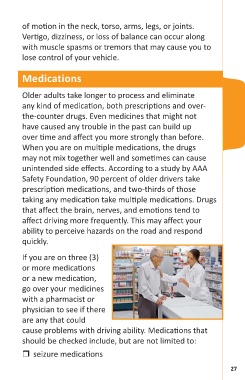
        If you are on three (3)
        or more medications
        or a new medication,
        go over your medicines
        with a pharmacist or
        physician to see if there
        are any that could
        cause problems with driving ability. Medications that

        should be checked include, but are not limited to:
        r    seizure medications

                                                                            27

