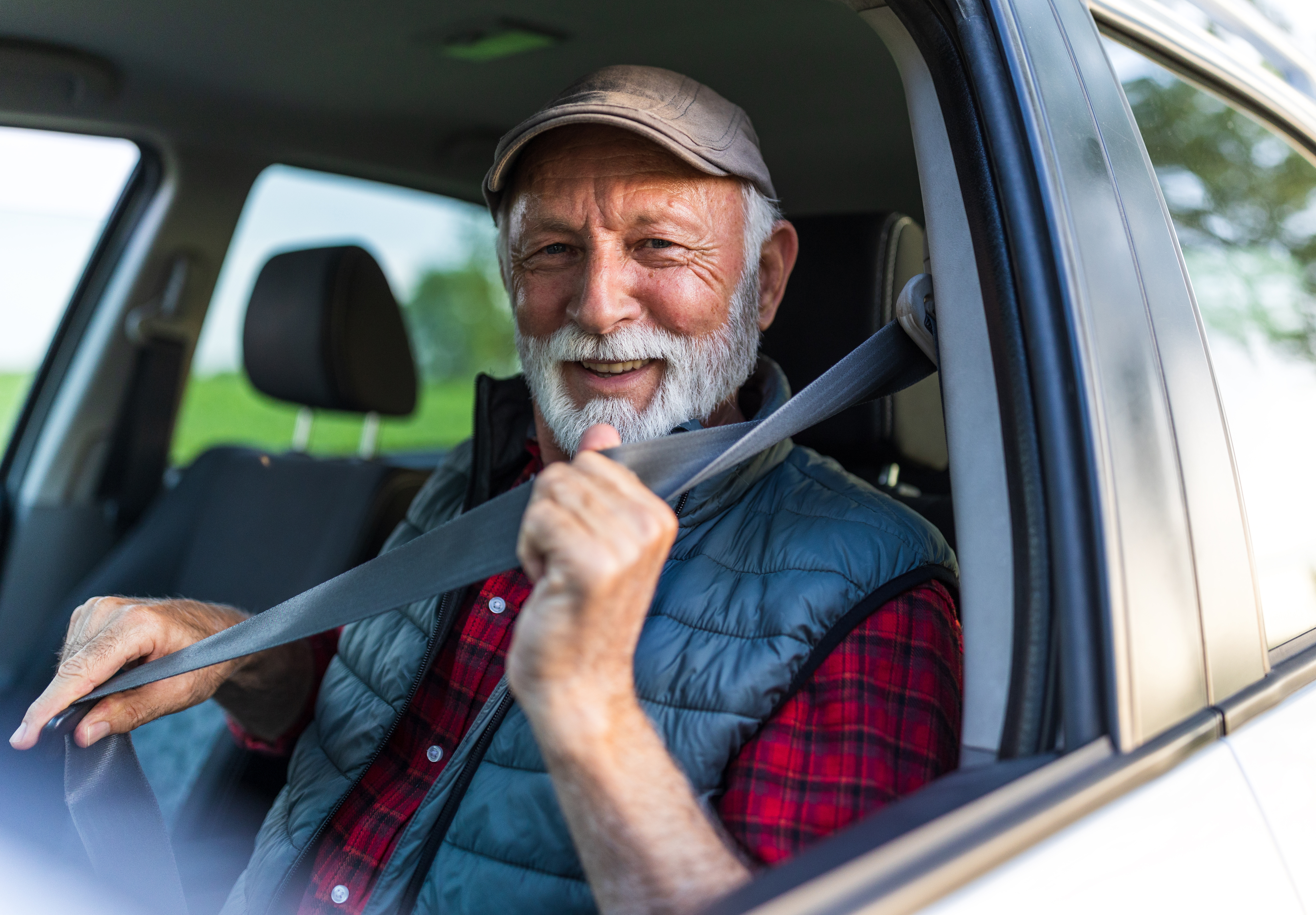
The information on this page will help you be proactive about your safe driving skills. Click on the boxes below to find practical tools, tips, and resources from either Safe Mobility for Life or our partners. These resources offer practical ways for you to improve safe driving skills and maintain independence.
To stay informed on the latest tips and resources to keep you safe and connected to your community using all transportation modes, please sign up for our Insider Newsletter!
Ways To Be Proactive
Assessing Your Driving
Taking a driving assessment can help you determine where you currently stand with your driving skills and whether it is wise to continue driving. There are a number of assessment tools available, including evaluations by health care professionals and online self-assessments. Both can help you make the right decision to remain a safe driver.
Older Driver Safety Questionnaire
With support from the National Highway Traffic Safety Administration, the American Geriatrics Society's Health in Aging Foundation developed the Older Driver Safety Questionnaire in collaboration with partners from FDOT and FSU College of Medicine. This interactive questionnaire will ask you questions about driving safety that you can answer either for yourself or for someone else. You will then be provided with suggestions based on your answers which you may want to share or discuss with your healthcare provider.
Please note: this questionnaire is meant to serve as a guide only. It is not intended to be a substitute for professional medical advice, diagnosis, or treatment. Be sure to speak to your healthcare provider about any concerns you may have about the questionnaire or your results, or any questions you may have regarding a medical condition.
You can take the interactive Driving Safety Questionnaire at the HealthinAging.org website.
Fitness-To-Drive Screening Measure©

The Fitness-To-Drive Screening Measure© (FTDS) developed by the University of Florida's Institute for Driving, Activity, Participation, and Technology (I-DAPT), is a web-based tool for caregivers and/or family members of older drivers and clinicians to identify at-risk older drivers. Caregivers and/or family members who have driven with the driver in the last three months, can rate a driver's difficulties with 21 driving skills, through this on-line screening. You can access the online version of the FTDS on the
I-DAPT website.
Driving Rehabilitation Specialists
Health care professionals with special training in driver rehabilitation are called Driver Rehabilitation Specialists (DRS). A DRS can provide driving evaluations in an office or in a car to understand your physical, visual, and cognitive abilities as a driver. They work with you to build on your strengths and make suggestions to help you drive safely. To find a certified Driver Rehabilitation Specialist, visit aded.net.
Driver Safety Courses and Workshops
CarFit
CarFit is a free educational program created by the American Society on Aging and developed in partnership with AARP and the American Occupational Therapy Association. It is designed to help keep you safe and comfortable by improving the "fit" between you and your personal vehicle. Safe Mobility for Life has adopted CarFit as an effective tool to be proactive about safe driving skills. Learn more about CarFit events and resources on our CarFit page.
Driver Safety Courses
If you are a Florida driver 55 years of age or older, you are eligible to complete an approved driver safety course and could receive a cost reduction on your car insurance for three years. These classes are an opportunity to maintain your safe and defensive driving skills, better understand your abilities and learn techniques to compensate for age-related changes.
You can find a list of Mature Driver Discount Insurance Courses with registration information on the FLHSMV website.
Driving Skills
It is important to learn about tips and resources available to help you reduce risks and maintain your safe driving abilities. This section will share information and resources on how you can enhance your safe driving skills.
The Florida Department of Transportation (FDOT) is making improvements that not only help older adults but benefit people of all ages.
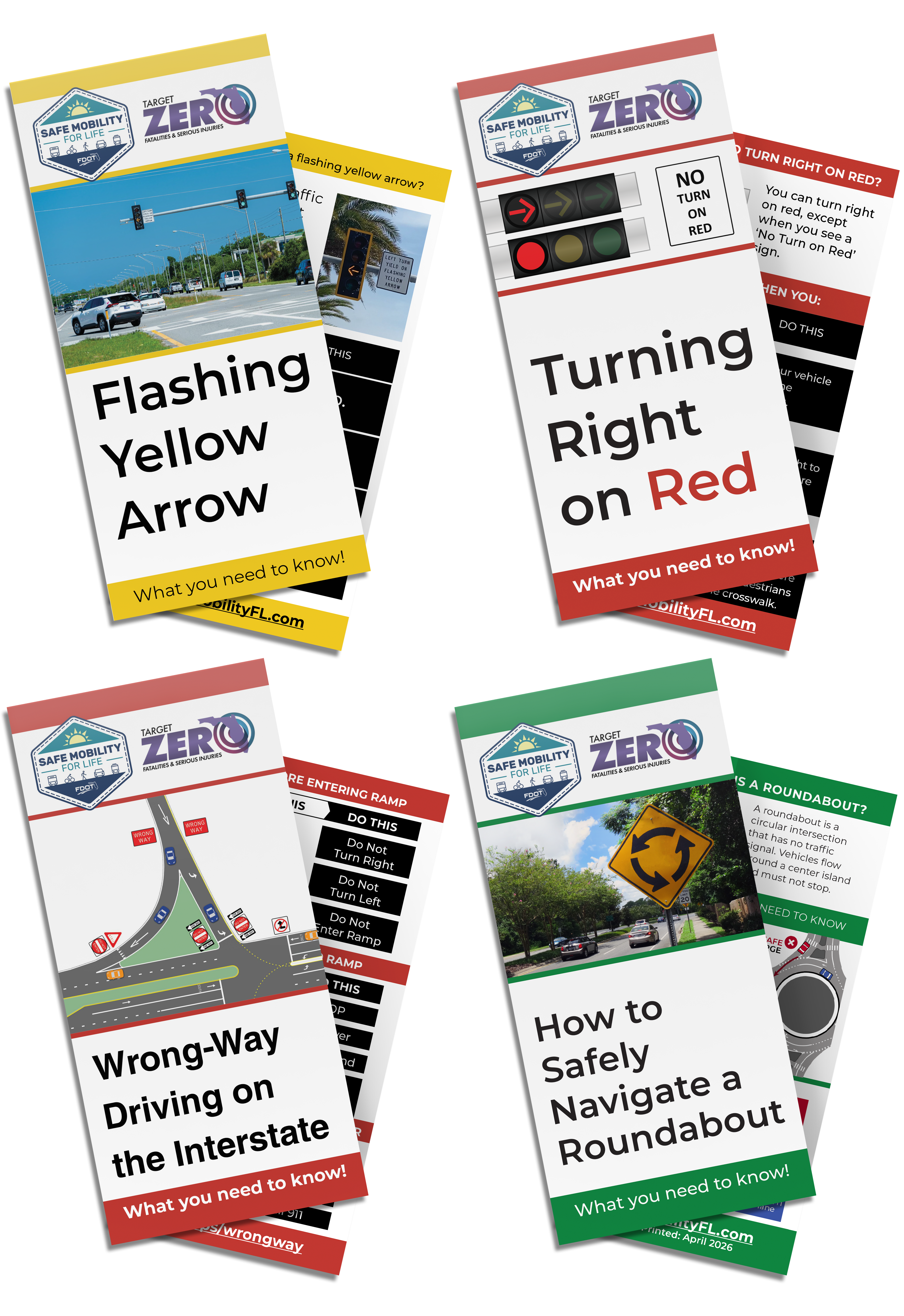
Safe Mobility for Life created a Roadway Safety Series of both print and digital graphics to help you understand and properly use roadway safety improvements such as Flashing Yellow Arrows, Turning Right on Red, Wrong-Way Driving, and Roundabouts
To view or order any of these educational materials, visit the Resource Center.
Help on the Road
FDOT and its partner agencies offer a variety of services that aid those traveling on Florida’s roadways. Knowing about these options and how to access them is an excellent way to be proactive as a driver.
Florida 511
Florida 511 is Florida's Official Source for Real-Time Traffic Information Traveler and is a FREE service developed by the FDOT. The FL511 system provides 24/7 traffic information on Florida's interstates, Florida's Turnpike and associated toll roads and many state highways. Some of FL 511 features include, information on crashes, congestion, construction, detours and other incidents, and severe weather notifications.
There are four convenient ways to connect with FL511 to receive traffic updates:
- Download the free Florida 511 Mobile App available on Google Play or Apple App Store.
- Visit FL511.com for interactive roadway maps showing traffic congestion and crashes, travel times, and traffic camera views. Website information is available in English and Spanish.
- Sign up for a My Florida 511 account at FL511.com to create custom routes and register to receive email and/or text alerts that pertain to those routes.
- Follow @FL511 on Facebook for latest updates and statewide information. Each Florida region has their own FL511 page on X where you can find specific updates related to your region. To find and follow your region, go to fdot.info/FL511-regions.
Road Rangers

FDOT’s Road Ranger Service Patrol provides incident management response services and limited no-cost highway assistance to improve highway safety for the emergency responders and the public.
Road Rangers patrol congested and high incident areas along urban freeways. Their vehicles are equipped with tools like, booster cables, fire extinguishers, first aid kits, reflective cones to assist drivers.
Dial *347 (FHP) on your mobile phone to request a Road Ranger or if you are experiencing or witnessing an emergency.
Emergency Evacuation

The best time to prepare for a potential emergency is now, when you are calm and have time to ensure your preparations are in place. That way, if news comes of an approaching storm or any other emergency, you will be ready to take care of yourself and your family. Knowing where you will go and how you will get there is key to preparing a safe and successful emergency evacuation plan.
The Florida Division of Emergency Management offers storm information plus guidance on how to make an emergency plan, visit floridadisaster.org to learn more. There is a special needs registry to assist people with physical, mental, cognitive, or sensory disabilities. Prior to any emergency, contact your county emergency management office to see if you are eligible for this registry.
Sharing the Road
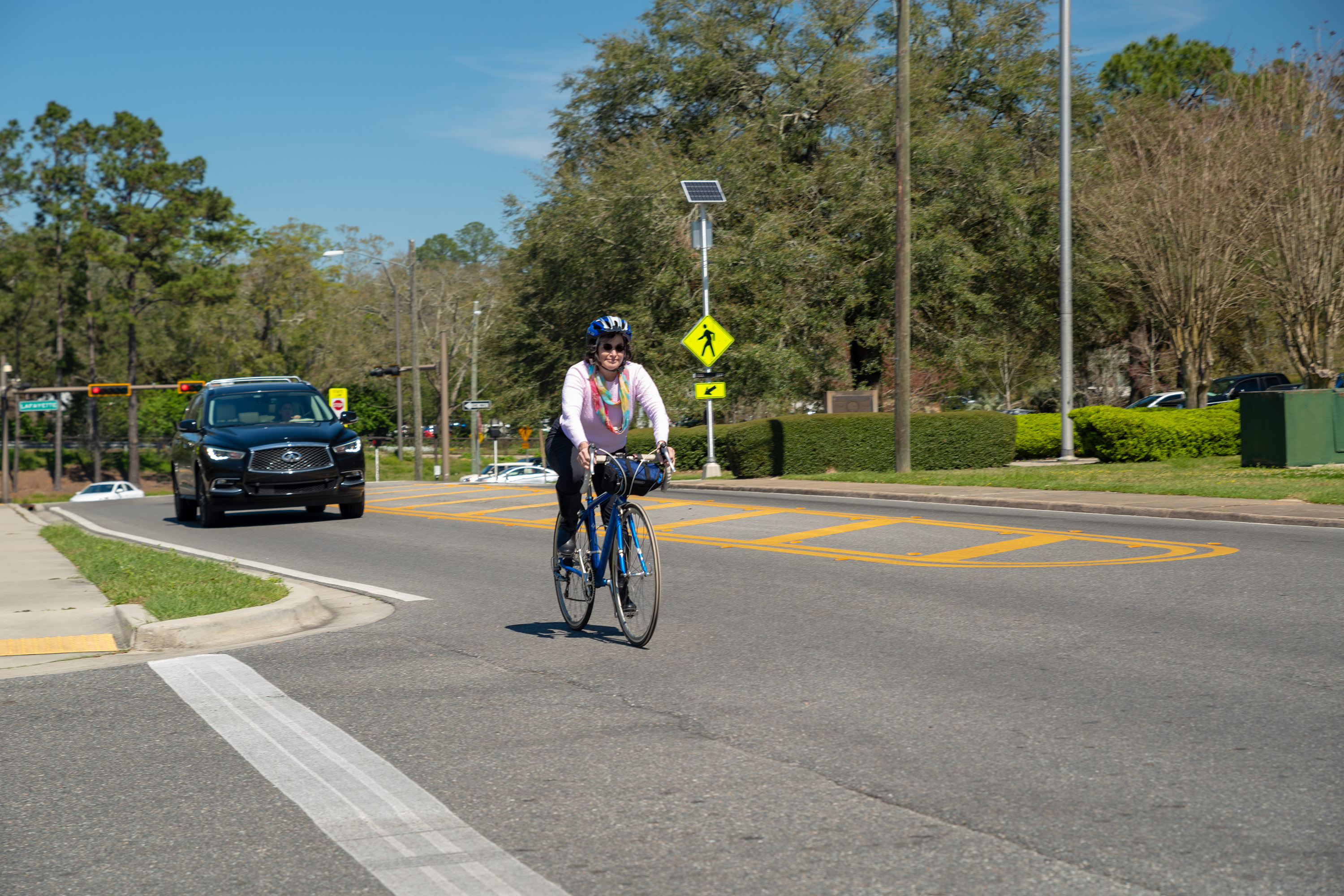
Not all travelers drive cars. Many people walk, ride bicycles, drive motorcycles or use golf carts. When driving, expect to encounter other people using the road at anytime and anyplace. Here are a few tips to help you safely share the road with others:
- Watch carefully for pedestrians, bicyclists, and motorcyclists, They can be hard to notice – especially in bad weather or at night.
- Stop before making a right turn at a red light or stop sign. Pedestrians and bicyclists using crosswalks at intersections rely on this time to cross.
- Scan the road ahead before making a turn to look for pedestrians, bicyclists, or vehicles that may cross into your intended path.
- When approaching a crosswalk, drive slowly and be prepared to stop.
- Do not pass other vehicles that are stopped for pedestrians.
- Always look out for pedestrians in parking lots and be extra careful when backing out of a parking space.
- When passing a motorcycle, give a full lane to the motorcycle. Do not share lanes!
- Always stop for any person who is blind or visually impaired and stepping into the road, regardless of their location. This is known as the White Cane Law.
Safe Driving Tips
Every time you get in your vehicle to drive, it is important to remember the following:
- Always wear your safety belt correctly. The shoulder belt should lie across the middle of the chest and shoulder, not the neck or throat. The lap belt should be low and snug across the upper thighs, not the belly.
- Always use your turn signal ahead of time when changing lanes and making turns.
- Always look twice before turning and check your blind spots before changing lanes or merging.
- Never drive when impaired by alcohol, recreational, prescription, or over-the-counter medications.
- Never drive if you are tired or drowsy. This can be particularly important for drivers suffering from sleep apnea.
- Always pay attention to the task of driving and do not be distracted by external factors such as passengers, cell phones, etc.
You can learn more safety and information on how to be proactive as a driver, pedestrian, bicyclist, motorcyclist, or golf cart drivers in Chapter 2 of Florida's Guide to Safe Mobility for Life.